





What if that persistent burning sensation beneath your dental acrylic is actually a ticking time bomb for your gums? Research published by the National Institutes of Health reveals that up to 63 percent of individuals battling denture stomatitis experience zero early pain, allowing fungal biofilm to quietly irritate delicate palate tissue unnoticed.
You rely on your dentures to enjoy life, not to trap fiery inflammation, trigger sour tastes, or cause recurring embarrassment around the dinner table. When the roof of your mouth feels raw and store-bought soak tablets fail to stop the irritation, it’s completely normal to feel frustrated and fearful about losing your teeth during treatment.
You don’t have to live with chronic discomfort. Discover how to spot, treat, and eliminate denture stomatitis before chronic yeast infections destroy your gum tissues and oral health. Below, we break down five unmistakable warning signs, examine why standard soaking routines fall short, and outline proactive clinical solutions that restore lasting oral comfort.
Key Takeaways
- Understand why denture stomatitis develops beneath acrylic plates and how unchecked Candida albicans colonies quietly irritate your palate.
- Discover how wearing appliances around the clock and microscopic surface pores create an oxygen-deprived breeding ground for resilient yeast.
- Learn the vital dual-action sanitization routine required to treat both your delicate oral tissues and your prosthetic base to halt recurring infections.
- See how targeted clinical adjustments and 3D digital scanning technology in Red Deer resolve uneven pressure points without uncomfortable impression trays.
What Is Denture Stomatitis and Why Are Your Gums Inflamed?
Denture stomatitis is an inflammatory reaction affecting the delicate palatal mucosa covered by removable dental appliances. Known clinically as denture-related stomatitis, this condition stems from an overgrowth of Candida albicans, an opportunistic fungal organism. When acrylic plates rest continuously against oral tissues, they restrict natural saliva circulation, creating an oxygen-deprived environment where fungal biofilms multiply rapidly.
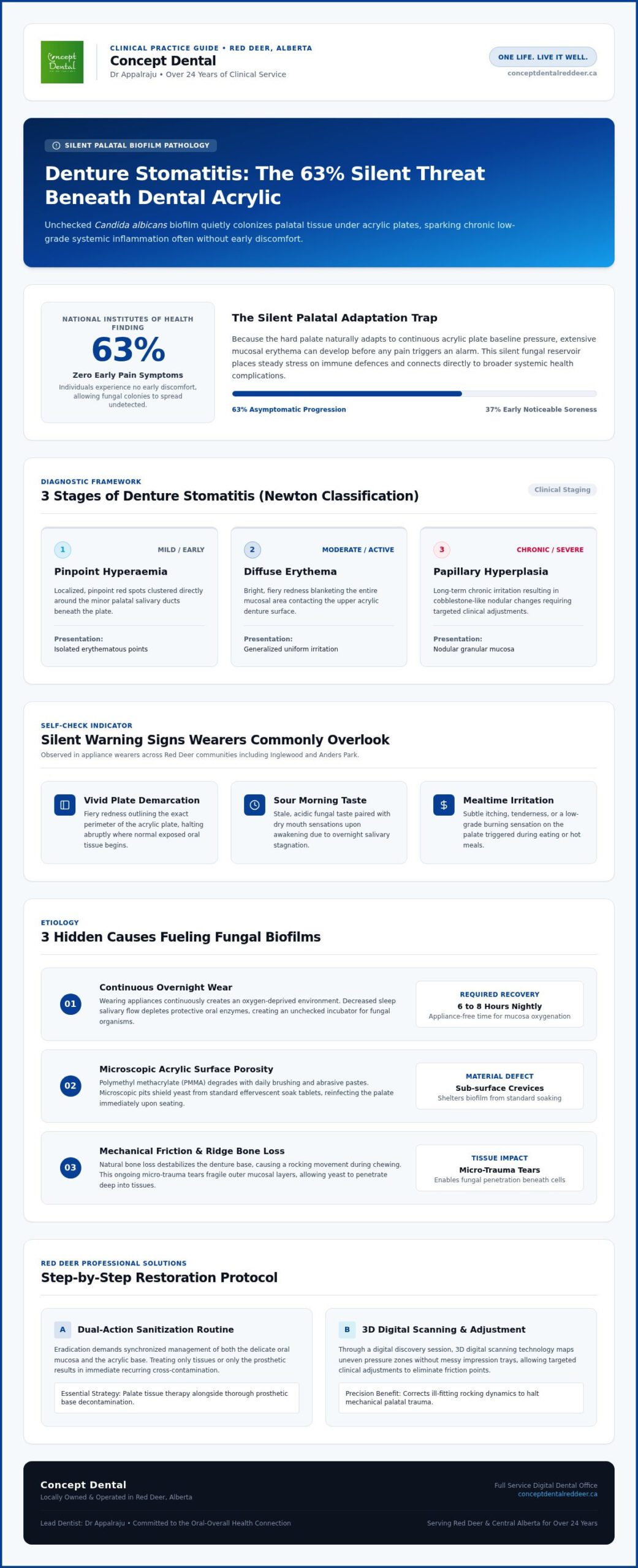
Because the hard palate adapts to constant baseline pressure, intense tissue inflammation frequently develops without sharp pain. Many individuals feel completely fine even while vivid redness spreads beneath their plate. This silent reservoir of yeast triggers persistent low-grade systemic inflammation, placing unnecessary stress on your immune defences. Dr Appalraju regularly educates patients on the oral-overall health connection, highlighting how chronic oral infections quietly complicate whole-body health and metabolic stability.
The 3 Stages of Denture Stomatitis Under Newton Classification
Dental professionals classify the progression of this condition into three defined stages:
- Stage 1: Localized pinpoint hyperaemia, visible as tiny, isolated red dots centered around minor palatal salivary ducts.
- Stage 2: Diffuse erythema, presenting as bright, fiery redness that blankets the entire mucosal surface contacting the upper denture.
- Stage 3: Granular papillary hyperplasia, where long-term chronic irritation causes cobblestone-like nodular changes that require clinical adjustment or professional evaluation in Red Deer.
Silent Warning Signs Wearers in Inglewood and Anders Park Overlook
For appliance wearers across Red Deer communities like Inglewood and Anders Park, early indications are easy to miss. Watch for these subtle warnings:
- Vivid plate demarcation: Fiery redness that matches the exact perimeter of your acrylic dental plate, ending sharply where exposed tissue begins.
- Sour morning taste: A stale, acidic fungal taste paired with dry mouth sensations immediately upon waking up.
- Mealtime irritation: Mild itching, tenderness, or a low-grade burning sensation along the roof of the mouth during dinner.
3 Hidden Causes Fueling Fungal Biofilms Under Dental Appliances
Eliminating oral yeast requires understanding why it roots beneath dental acrylic in the first place. While many view fungal irritation as a simple cleanliness issue, the reality involves a complex balance of mechanical wear, material porosity, and systemic health. According to the Cleveland Clinic overview of denture stomatitis, persistent fungal overgrowth stems from compounding daily factors rather than isolated hygiene slips. Systemic elements like blood glucose fluctuations in diabetes, immune suppression, and dry mouth medications accelerate this susceptibility by reducing natural mucosal defences.
Older polymethyl methacrylate resin naturally degrades over time. Daily brushing with abrasive pastes carves microscopic pits across the underside of the plate. These tiny crevices shelter yeast from standard effervescent soak tablets, creating deep biofilm colonies that reinfect the palate the moment you seat your teeth. A quick digital discovery session can reveal whether unseen surface wear is sabotaging your daily cleaning routine.
Wearing Dentures Overnight: The Dark, Oxygen-Deprived Fungal Incubator
Wearing appliances continuously cuts off vital oxygen to palatal mucosa. Sleep drastically lowers natural salivary flow, drying out oral tissues and stripping away defensive enzymes that keep yeast in check. Trapped against warm, unventilated tissue, opportunistic spores flourish undisturbed. Your gums need six to eight hours of nightly appliance-free recovery to re-establish healthy blood circulation and maintain strong mucosal resistance.
Friction and Ill-Fitting Plates: How Bone Loss Triggers Infection
Natural jawbone remodelling changes the topography of your ridges over time. Gradual bone loss destabilizes the bite, creating a rocking motion every time you chew or swallow. This instability generates repetitive micro-trauma across the palate, producing microscopic surface tears that allow yeast to burrow beneath protective outer cell layers. Read our guide on restorative dentistry Red Deer to understand oral tissue preservation and discover how correcting poor balance halts denture stomatitis at its mechanical source.
Step-by-Step Protocol to Eliminate Yeast and Restore Healthy Gums
Halting denture stomatitis requires an aggressive two-front strategy. Treating only the red, swollen palate while reinserting an unsterilized acrylic base guarantees immediate reinfection. Research demonstrates that topical nystatin therapy achieves its highest clinical cure rates when paired with rigorous daily appliance decontamination. Follow this structured daily routine to disrupt fungal colonies permanently:
- Mechanically debride after eating: Rinse your mouth and gently brush both sides of your plate with a soft-bristled brush to remove food debris and sticky biofilm.
- Apply targeted topical therapy: Use prescribed antifungals across the palate, ensuring medication contacts bare tissue rather than the acrylic surface.
- Disinfect overnight: Submerge your clean appliance in an approved sanitizing bath for six to eight hours while your mouth rests and reoxygenates.
- Rinse thoroughly before insertion: Flush the appliance with clean tap water every morning to wash away residual cleaning chemicals before placing it back in your mouth.
Sanitizing Your Dental Appliance Without Damaging Delicate Pink Acrylic
Harsh cleaners scratch acrylic, creating fresh microscopic niches where yeast thrives. Clean your appliance using non-abrasive denture pastes or mild, unscented dish soap rather than standard gritty toothpastes. Soak full acrylic appliances overnight in diluted alkaline peroxide baths or professional antifungal solutions. Never submerge appliances containing metal clasps in chlorine bleach solutions, as bleach corrodes chrome-cobalt frameworks and weakens structural integrity.
Healing Palatal Tissues: Topical Antifungals and Soft Tissue Care
Pharmaceutical intervention calms inflamed mucosa effectively when applied correctly. Coat affected tissues with prescribed nystatin oral suspension or miconazole gel four times daily for 14 to 28 days, holding the liquid against the palate as long as possible before swallowing. Each evening, massage the roof of your mouth with a warm, damp facecloth or an ultra-soft brush to stimulate blood flow and clear sloughed cells. Discover how our wisdom tooth extraction Red Deer treatments prioritize precise tissue healing to support lasting oral health.
Professional Solutions in Red Deer: When Good Hygiene Is Not Enough
Arthur, a retired woodworker from West Park, spent nearly three years tolerating fiery soreness across the roof of his mouth. He assumed raw, stinging tissue was simply an unavoidable reality of wearing dentures. When he visited Concept Dental, Dr Appalraju identified advanced denture stomatitis driven by unseen acrylic friction and poor baseline retention. Through targeted intervention and personalized appliance modifications, Arthur eliminated his persistent discomfort within weeks and regained the simple pleasure of eating without irritation.
Digital Diagnostics and Precision Relines at Concept Dental
At our independent office, proudly serving Central Alberta for over 24 years, Dr Appalraju evaluates mucosal irritation using advanced digital scanning technology. This 3D imaging pinpoints uneven pressure ridges in seconds, completely bypassing messy, gag-inducing impression trays. A precision clinical adjustment Red Deer rebalances contact points, while an in-office reline seals out trapped food particles. Concept Dental strictly follows CDSA guidelines to ensure exceptional standards of infection control and patient safety throughout every appointment.
Permanent Stability: Exploring Implant-Supported Alternatives in Central Alberta
While precision relines provide rapid relief, eliminating the acrylic roof plate altogether offers the most decisive defense against recurring denture stomatitis. Mentored in advanced surgical techniques by the late implant pioneer Dr Carl Misch, Dr Appalraju helps patients transition to permanently anchored prosthetics. Choosing dental implants Red Deer leaves the palate exposed to natural airflow and saliva circulation, dramatically lowering fungal risks while halting bone loss. You have One Life. Live it well.
Reclaim Your Comfort: Stop Oral Yeast Before It Spreads
Living with raw, burning gums should never feel like the inevitable price of wearing dentures. Denture stomatitis is an active biofilm infection that demands dual-action care: targeted tissue soothing paired with strict daily appliance sanitization. Waiting for symptoms to worsen allows tissue changes to advance needlessly, whereas choosing proactive wellness protects your gums, preserves jawbone stability, and safeguards your vitality.
For over 24 years, Dr Appalraju has provided trusted, compassionate dental care to families across Central Alberta. As an independent, locally owned clinic that has donated over $1.5 million to community causes, Concept Dental prioritizes your comfort using advanced 3D digital scanning technology to pinpoint fit issues without messy impression trays.
Relief from persistent redness and sour odours is closer than you think. Take the proactive step today, restore balance to your palate, and enjoy every meal with complete confidence.
Frequently Asked Questions About Denture Stomatitis
Is denture stomatitis contagious to my spouse or family members?
No, denture stomatitis is not considered contagious to your partner or family. The condition stems from an opportunistic overgrowth of Candida albicans, an organism that lives naturally in most healthy human mouths. It only triggers active inflammation when an unventilated acrylic plate, friction, or dry mouth disrupts your oral balance. You won’t transmit the infection through normal kissing, sharing cups, or daily household contact.
Can I use regular bleach to disinfect my denture if it has thrush?
Household bleach should never be used on dental appliances containing cast metal frameworks, clasps, or flexible gaskets. Bleach corrodes metal alloys quickly, turning them brittle and discoloured. While diluted sodium hypochlorite baths can safely disinfect full pink acrylic plates, leaving appliances submerged too long bleaches out their lifelike gum colouring. Always consult your dental team for approved antifungal soaking tablets formulated specifically for prosthetic resin.
Why do my gums burn under my denture even though it does not feel loose?
A denture does not need to feel loose in your mouth to cause tissue irritation. Microscopic surface flaws on the fitting side of older acrylic harbor dense fungal colonies that continuously shed inflammatory toxins directly against your palate. Even minor bite misalignments create concentrated pressure hotspots during chewing, causing localized capillary inflammation and burning sensations long before your plate feels unstable or slips out of place. For individuals exploring permanent alternatives that keep the palate uncovered, full-arch implant providers such as Onx75 demonstrate how fixed restorations eliminate acrylic plate contact and prevent recurring mucosal irritation.
Does my dental benefit plan cover treatment for denture stomatitis in Alberta?
Most private and provincial dental benefit plans in Alberta provide coverage for diagnostic examinations, clinical relines, and in-office appliance adjustments. Concept Dental follows the standardized Alberta Fee Guide to ensure completely transparent, predictable billing for your care. While prescription antifungal suspensions or topical gels are typically claimed through your extended pharmacy benefits, our administrative team reviews your paperwork directly to help maximize every eligible claim.
How long does it take for denture stomatitis to heal completely?
Mild palatal inflammation usually begins clearing within 10 to 14 days of starting daily antifungal therapy and nightly sanitization. Moderate to advanced cases involving textured tissue changes typically require a full 28-day course of topical medication paired with an appliance reline. Completing the entire course of medication is essential. Stopping early allows resilient fungal spores hiding within the acrylic pores to multiply and trigger an immediate recurrence.
Can denture stomatitis turn into oral cancer if left untreated?
Denture stomatitis itself is a benign fungal infection, but ignoring chronic inflammation carries serious oral risks. Leaving fiery palatal tissue untreated for years can trigger inflammatory papillary hyperplasia, causing thick nodular changes across the roof of your mouth. Severe chronic inflammation also masks subtle tissue dysplasia. Routine mucosal evaluations ensure any suspicious oral lesions are identified, biopsied, and safely managed as early as possible.

Article by
Dr K Appalraju
Dr Appalraju grew up in South Africa and Calgary, Alberta. He holds a BSc. From The University of Calgary and DDS from The University of The West Indies. He successfully completed all Canadian professional Exams in 2002 and has been practicing in Red Deer, Alberta at the same location for 24 years. Dr Appalraju frequently completes more than double the required Dental Continuing Education than required by the College of Dental Surgeons of Alberta. He is an active member of the Canadian Dental Association, The Alberta Dental Association and the American Dental Society of Anesthesia. Dr Appalraju completed Dental Implant training under the guidance of late Dr Carl Misch. Dr Appalraju also was taught bone graft techniques by Dr Joseph Choukroun, MD of France. Dr Appalraju completed IV training at the University of Alberta in 2010. Dr Appalraju has extracted an estimated 18,000 teeth in his career spanning over 30 years.